

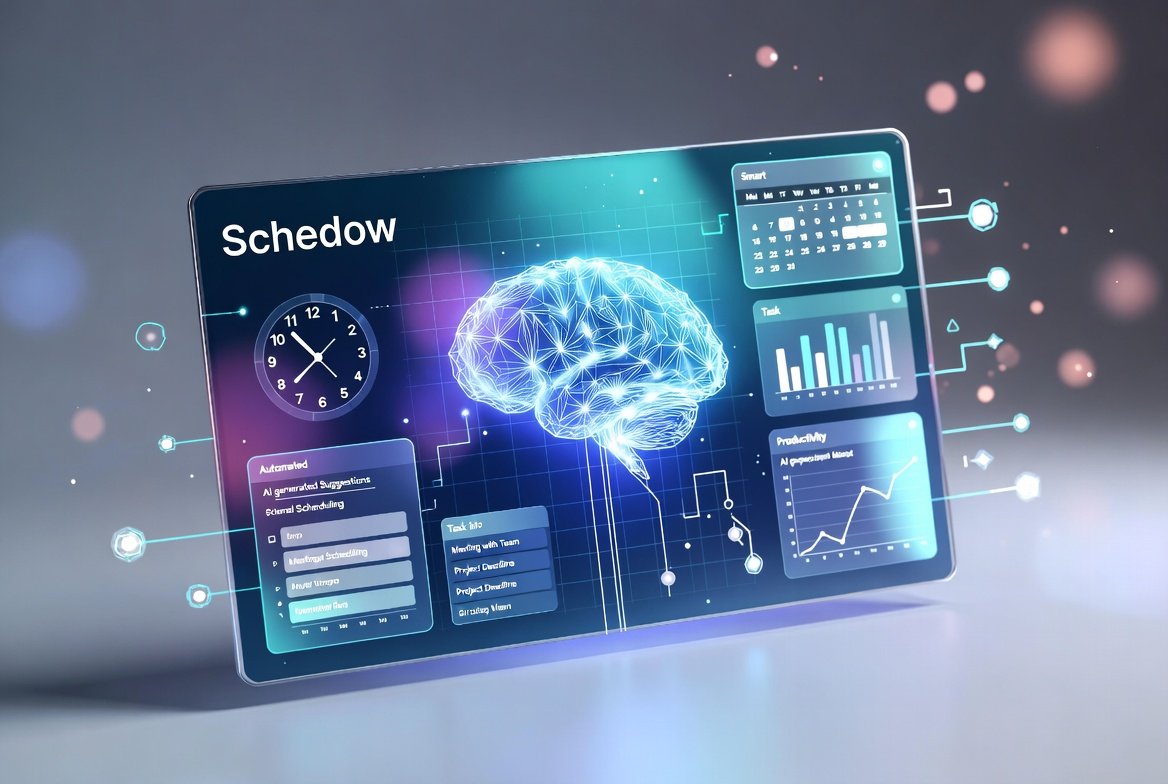
Time is the one resource that cannot be recovered once spent. Yet most professionals, students, and business owners continue to manage it with tools that were designed decades ago for a very different kind of workday. The concept of schedow addresses this gap directly, offering a framework and, in its most developed form, an AI-powered platform that transforms how people plan, protect, and use their time.
What Does Schedow Mean?
The word schedow sits at an interesting intersection of language, concept, and technology. Linguistically, it draws on two familiar ideas: schedule and shadow. A schedule is a structured plan that organises time. A shadow suggests something that follows closely, mirrors a form, or exists as an outline of something not yet fully realised.



When combined, schedow captures the idea of a plan that is present but fluid, an organised framework that moves with you rather than constraining you. Some interpretations describe it as the shadow of a schedule, meaning the informal, adaptive version of a plan that reflects real life more honestly than a rigid timetable. Others use it specifically to refer to AI-driven scheduling systems that learn from your behaviour and shape themselves around how you actually work.
In its most practical sense, schedow refers to any intelligent, responsive approach to scheduling that prioritises genuine productivity over the appearance of being organised. It is the difference between a calendar that simply records your commitments and one that actively helps you honour them.
The Problem Schedow Is Designed to Solve
Modern professionals face a scheduling crisis that traditional tools are not equipped to handle. Remote work, global collaboration across time zones, digital notifications, back-to-back meetings, and the constant competition for attention have created what many researchers describe as a time management emergency.
The symptoms are familiar. A calendar that looks full but contains no protected time for actual work. Days that end with the urgent completed but the important neglected. Meetings that colonise the most productive hours of the morning. Focus time that gets scheduled but then surrendered the moment a colleague requests a call. The feeling that you are perpetually busy but never quite progressing.
Schedow as a concept responds to all of these. It begins from the premise that time must be actively protected, not just recorded, and that the intelligence required to protect it properly is now available in the form of AI systems that can learn your patterns, predict your needs, and make proactive scheduling decisions on your behalf.
Schedow as an AI-Powered Scheduling Platform
In its most developed form, schedow refers to a category of intelligent scheduling tool that goes well beyond the passive functionality of a standard digital calendar. Rather than simply showing you what has been added to your schedule, a schedow system analyses your calendar, learns from your behaviour, and makes active recommendations designed to improve how your time is allocated.
How the Intelligence Layer Works
The core of any schedow platform is its ability to learn. By observing how you use your calendar over time, the system identifies patterns that you may not consciously notice yourself. It learns when you tend to do your most focused work, which types of tasks you consistently schedule but never complete, how much buffer time you actually need between appointments, and when your energy is best suited to collaborative versus independent work.
Using this accumulated understanding, the system begins to make proactive suggestions. If your schedule for a given day contains no protected focus time, the schedow system flags this and proposes restructuring. If a pattern in your week is consistently producing burnout signals, the system identifies it and recommends changes before the effects compound. This reactive intelligence is what distinguishes a true schedow approach from simply using a smarter calendar app.
Automated Time Blocking
One of the most practically valuable features of schedow-based tools is automated time blocking. Rather than leaving your working day open to be consumed by meetings, the system identifies windows of high-focus potential based on your productivity patterns and reserves them before others can claim them. These protected blocks are defended against new scheduling requests unless you explicitly override them, ensuring that deep work is not perpetually sacrificed to reactive meetings.
Dynamic Task Prioritisation
Schedow systems connect task management to calendar management. When a deadline shifts or a new priority emerges, the system reassesses your entire schedule in the context of the change and updates its recommendations accordingly. Tasks are ranked not just by due date but by importance, effort required, and available time windows, ensuring that the most meaningful work receives the most appropriate scheduling rather than simply being added to an ever-growing list.
Intelligent Meeting Coordination
One of the most consistently time-consuming activities in professional life is the scheduling of meetings, particularly when multiple participants are involved. Schedow systems integrate with calendar platforms across a team and identify mutually available time slots automatically, eliminating the extended email threads that typically accompany group scheduling. For leaders who manage recurring team meetings or cross-functional planning sessions, this feature alone can recover meaningful amounts of time each week.
Calendar Integration
An effective schedow platform does not require you to rebuild your workflow from scratch. It integrates with the calendar and task management tools you already use, including Google Calendar, Microsoft Outlook, Apple Calendar, and major project management platforms. This means that deadlines and milestones from your project management system feed directly into the scheduling intelligence, generating protected work time automatically when an important milestone approaches.
Schedow in Personal Productivity
The principles behind schedow are not limited to software platforms. They can be applied as a personal productivity philosophy regardless of the specific tools you use. At its core, the schedow approach to personal time management involves several key shifts in thinking.
From Reactive to Proactive Planning
Most people plan their day reactively, fitting tasks around existing commitments as they arrive. The schedow approach reverses this. You begin by identifying the work that matters most, block time for it first, and only then allow meetings and other commitments to fill the remaining space. Your most valuable work is never what gets scheduled last.
From Fixed to Adaptive Schedules
A schedow is not a rigid timetable. It is a responsive plan that accommodates reality. When something unexpected disrupts your day, the schedow approach does not collapse into disorder. Instead, it adjusts, reassigns priorities, and recovers the most important elements of the original plan. Flexibility and structure are treated as complementary rather than contradictory.
From Busyness to Productivity
One of the central insights of the schedow philosophy is the distinction between being busy and being productive. A full calendar is not evidence of progress. What matters is whether the time being spent is aligned with the outcomes that matter most. Schedow systems make this visible, using analytics and reporting to show how time is actually being used rather than how it appears to be allocated.
Types of Users Who Benefit Most From Schedow
| User Type | Key Challenge | How Schedow Helps |
|---|---|---|
| Knowledge Workers | Meetings consuming focus time | Automated blocking of deep work windows |
| Team Leaders | Coordination overhead across teams | Intelligent meeting scheduling across participants |
| Freelancers | Inconsistent workloads and self-management | Dynamic prioritisation aligned with deadlines |
| Students | Balancing study, assignments, and personal time | Adaptive planning that accommodates changing priorities |
| Remote Workers | Boundary management and time zone complexity | Automated coordination and focus protection |
| Entrepreneurs | Switching between strategic and operational work | Contextual scheduling that matches task type to energy levels |
Building Your Own Schedow: Practical Steps
If you want to apply the schedow approach without using a dedicated AI platform, the following practices form the foundation of the methodology.
- Start with a weekly review: Before the week begins, identify the three to five outcomes that would make the week genuinely successful. These, not your inbox, should drive your schedule.
- Block before others book: Reserve time for your most important work at the start of each week, before reactive requests fill your calendar.
- Audit your meeting load: Regularly review recurring meetings and ask honestly which ones are essential. Eliminating or reducing low-value meetings creates space for meaningful work.
- Create buffer time deliberately: Schedule short gaps between meetings and tasks rather than stacking them end to end. This reduces cognitive load and prevents cascading delays.
- End each day with a brief plan: Spend five minutes at the end of each working day reviewing what happened and setting priorities for the next. This prevents the reactive scramble that often characterises morning starts.
- Review your time data: If your calendar tool provides analytics, use them. Understanding how your time is actually being spent is the first step to improving the allocation.
Schedow vs Traditional Scheduling Approaches
Traditional scheduling tools were built around recording and displaying information. You add appointments, set reminders, and share availability. The system passively reflects what you put into it. The schedow approach represents a fundamental shift from this model.
Where a traditional calendar responds to input, a schedow system generates recommendations. Where a traditional planner records commitments, a schedow approach actively protects them. Where traditional time management tools treat all scheduled items as equal, schedow intelligence differentiates between the urgent and the important, and allocates time accordingly.
The practical difference is significant. A well-implemented schedow approach does not just make you more organised. It makes you more effective, because the time you invest in planning translates into measurably better outcomes rather than a more impressive-looking calendar.
Limitations of the Schedow Approach
No productivity system works without the right conditions, and schedow is no exception. Several limitations are worth understanding before committing to any particular implementation.
The effectiveness of AI-driven schedow platforms depends on calendar discipline. If your calendar does not accurately represent your real commitments, the system is making recommendations based on incomplete data. Users who keep thorough, honest calendars get significantly more from schedow intelligence than those who treat their calendar loosely.
There is also a learning curve. Schedow systems improve over time as they accumulate data about how you actually work. In the first days of use, recommendations may not be perfectly calibrated. Users who expect immediate perfection may find the early experience frustrating. The full value of the approach emerges with consistent use.
Finally, schedow cannot solve problems that are fundamentally organisational rather than personal. If a workplace culture systematically disrespects boundaries, fills every available calendar slot with meetings, and treats focus time as optional, a scheduling system, however intelligent, cannot fully overcome those structural pressures alone.
The Future of Schedow
The direction of schedow technology points toward increasingly seamless integration between the tools professionals use and the intelligence that shapes how those tools interact. Schedow systems are likely to become ambient, operating in the background of work platforms rather than as a separate application requiring deliberate engagement.
Advances in AI will make behavioural learning more accurate and recommendations more contextually intelligent. Battery and device improvements will make schedow functionality available across more form factors. Privacy-focused design is becoming a priority, with users gaining greater control over what behavioural data is stored and how it is used.
The broader trajectory is toward a working world in which time is managed with the same sophistication currently applied to data, finances, and talent. Schedow, as both a concept and a category of tools, represents the leading edge of that shift.
Frequently Asked Questions About Schedow
What is schedow in simple terms?
Schedow is an intelligent approach to scheduling that combines structured planning with adaptability, often supported by AI systems that learn from your behaviour and make proactive recommendations about how to use your time more effectively.
Is schedow a specific app or platform?
Schedow refers both to a concept and to AI-powered platforms that embody that concept. Several tools operate on schedow principles, combining calendar integration, automated time blocking, task prioritisation, and behavioural analytics.
How is schedow different from a regular calendar?
A regular calendar records and displays information passively. Schedow goes further by analysing patterns, making recommendations, automatically protecting focus time, and dynamically adjusting priorities as circumstances change.
Can I use the schedow approach without AI tools?
Yes. The principles underlying schedow, including proactive time blocking, adaptive replanning, and prioritising outcomes over activity, can be applied using any planning tool as long as they are implemented consistently and deliberately.
Who benefits most from schedow?
Knowledge workers, team leaders, freelancers, students, and anyone whose working day involves competing demands on time will benefit from the schedow approach. It is particularly valuable for people whose calendars tend to fill with meetings at the expense of focused work.