

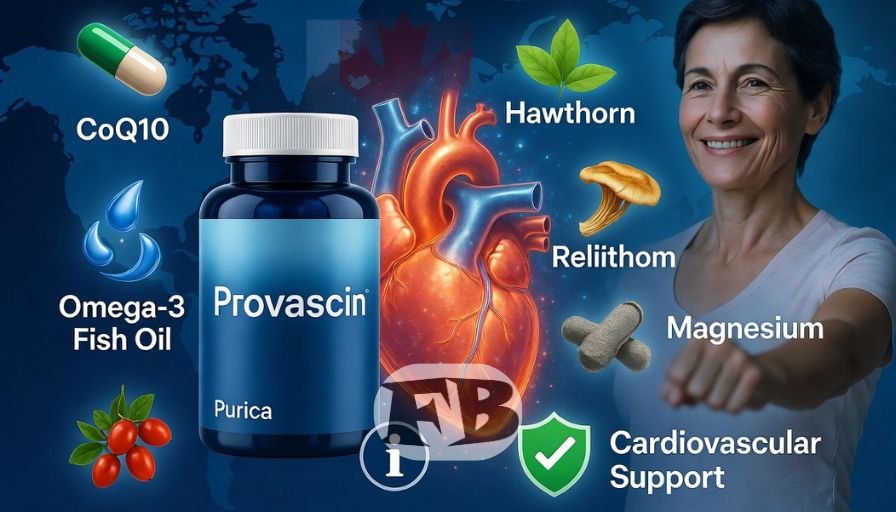
Provascin has been generating considerable interest in health and wellness circles, appearing on supplement review sites, consumer health forums, and comparison articles across the internet. If you have come across the name while researching cardiovascular health supplements or options for supporting blood flow, this guide provides a clear and honest overview of what Provascin actually is, what it claims to do, what its ingredients are designed to achieve, and what considerations matter most before deciding whether it is appropriate for your needs.
What Is Provascin?
Provascin is a dietary supplement marketed primarily for cardiovascular and circulatory support. The name is derived from the Latin-rooted prefix pro, suggesting support or promotion, and vascin, a reference to vascular, relating to blood vessels. Together the name communicates its primary positioning: a product designed to support the health and function of the vascular system.
The most established version of Provascin is produced by Purica, a Canadian natural health company that positions its products as adjunctive health tools, meaning they are intended to complement rather than replace a healthy lifestyle and, where relevant, conventional medical treatment. Purica has built a product range around natural health ingredients and positions Provascin within a broader cardiovascular wellness category.



It is important to understand that Provascin is not a prescription medication. It does not have the clinical trial requirement, regulatory scrutiny, or evidence threshold that prescription drugs must meet before being authorised for sale. As a dietary supplement, it is held to a different standard, and while its individual ingredients may have supporting research, the specific formulation’s efficacy is not established through the same rigorous process required for pharmaceutical drugs.
Who Makes Provascin?
The primary manufacturer associated with Provascin is Purica, a natural health products company operating from Canada. Purica describes its philosophy as centred on whole-body wellness and uses medicinal mushrooms, adaptogens, and plant-based compounds across its product range. The company has been operating for several years and maintains a presence in Canadian pharmacies and health food stores as well as through online retail channels.
Some sources refer to different versions of Provascin by different manufacturers. This reflects a situation common in the supplement market where similar names are used for different formulations across different brands, which is an important reason to read product labels carefully and verify what specific ingredients are in the version you are considering.
What Does Provascin Claim to Do?
The marketed benefits of Provascin typically centre on the following areas of cardiovascular and circulatory health:
- Improving blood circulation: Supporting the efficient flow of blood through the body, enabling oxygen and nutrients to reach tissues effectively
- Supporting healthy blood pressure: Helping maintain blood pressure within a healthy range through natural compounds with vasodilating or blood vessel-relaxing properties
- Maintaining healthy cholesterol balance: Contributing to the management of lipid levels, particularly LDL cholesterol and triglycerides
- Reducing oxidative stress on the cardiovascular system: Providing antioxidant support that helps protect blood vessels and heart tissue from free radical damage
- Supporting overall heart function: Contributing to the optimal functioning of the heart as a pump and the vascular system as a whole
These are broad wellness claims rather than specific medical claims. Under supplement regulations in most countries, manufacturers can make general structure and function claims about their products without being required to prove they treat, cure, or prevent any specific medical condition.
Common Ingredients Found in Provascin Formulations
The specific ingredients in Provascin depend on the manufacturer and the version of the product. However, cardiovascular support supplements with the Provascin positioning commonly include compounds from the following categories, each of which has been studied in the context of heart and vascular health.
Coenzyme Q10 (CoQ10)
CoQ10 is a naturally occurring compound produced by the body and found in every cell. It plays a central role in cellular energy production and acts as a powerful antioxidant. Levels of CoQ10 decline with age, and statin medications, widely prescribed for cholesterol management, are known to further reduce CoQ10 production. Supplementation with CoQ10 has been studied in the context of heart failure, hypertension, and mitochondrial function, with some evidence supporting modest benefits in these areas.
Omega-3 Fatty Acids
Omega-3 fatty acids, particularly EPA and DHA from marine sources, are among the most extensively studied nutrients in cardiovascular health. They have been shown to reduce triglyceride levels, support healthy blood pressure, reduce inflammation in blood vessels, and contribute to improved endothelial function. The evidence base for omega-3 in cardiovascular health is substantially more robust than for most other supplement categories.
Nattokinase
Nattokinase is an enzyme derived from natto, a traditional Japanese fermented soy food. It has demonstrated fibrinolytic activity, meaning it can help break down fibrin, the protein that forms blood clots. Research suggests that nattokinase supplementation may support healthy blood viscosity and reduce the risk of clot formation, though its interaction with anticoagulant medications requires careful attention.
Hawthorne Berry Extract
Hawthorn has a long history in traditional medicine as a heart tonic. Modern research has examined its potential effects on blood flow, blood pressure, and cardiac function. Hawthorn contains flavonoids and oligomeric proanthocyanidins that may improve coronary blood flow and support the strength of heart muscle contractions. Clinical trials have produced mixed results, but some have shown meaningful improvements in exercise tolerance and symptoms in people with mild heart failure.
Magnesium
Magnesium is an essential mineral that plays a role in over 300 enzymatic reactions in the body, including those involved in blood pressure regulation and maintaining normal heart rhythm. Magnesium deficiency is relatively common and has been associated with increased risk of hypertension and arrhythmias. Supplementation may help support blood pressure management in individuals with low magnesium status.
B Vitamins (B6, B9, B12)
B vitamins, particularly folate (B9), B6, and B12, play important roles in maintaining healthy homocysteine levels. Elevated homocysteine is a recognised risk factor for cardiovascular disease. Adequate B vitamin intake helps convert homocysteine into less harmful compounds, potentially reducing this risk factor.
Medicinal Mushroom Extracts
Some Provascin formulations, particularly those from Purica, include extracts from medicinal mushrooms such as reishi. Reishi has been used in traditional East Asian medicine for centuries and has been studied for its potential effects on blood pressure, cholesterol, and immune function. The evidence is preliminary in many areas, but some studies have demonstrated meaningful results in specific cardiovascular markers.
How Does Provascin Work?
Rather than a single mechanism of action, Provascin works through the combined effects of its ingredient profile, each of which addresses cardiovascular health from a different angle.
Some ingredients, such as nattokinase and omega-3 fatty acids, work primarily on blood viscosity and clotting factors. Others, like CoQ10 and magnesium, support cellular energy production and electrolyte balance that is essential for normal heart function. Antioxidants in the formula help protect the endothelium, the thin layer of cells lining blood vessels, from oxidative damage that contributes to arterial stiffness and plaque formation over time.
The combination approach is designed to address cardiovascular health multidimensionally rather than targeting a single pathway, which is consistent with the understanding that heart health is influenced by many interconnected factors simultaneously.
Who Is Provascin Designed For?
Cardiovascular support supplements like Provascin are typically marketed toward adults who are:
- Looking for proactive, preventive support for heart and vascular health as they age
- Managing borderline blood pressure or cholesterol levels and seeking additional nutritional support alongside lifestyle changes
- Taking statin medications and concerned about CoQ10 depletion as a side effect
- Interested in natural health approaches to complement their existing medical care
- Recovering from cardiovascular events and seeking supportive supplements under medical supervision
Provascin is not intended for and should not be used as a replacement for prescribed cardiovascular medications or medical treatment for diagnosed heart conditions without the explicit guidance of a qualified healthcare provider.
Important Considerations and Safety Information
| Consideration | What You Need to Know |
|---|---|
| Drug interactions | Nattokinase can interact with anticoagulant medications such as warfarin. Always disclose supplement use to your prescribing physician |
| Blood pressure medications | Some ingredients may have additive blood pressure-lowering effects. Monitor closely if taking antihypertensives |
| Pre-existing conditions | Anyone with a diagnosed cardiovascular condition should consult their cardiologist before starting any new supplement |
| Pregnancy and breastfeeding | The safety of many supplement ingredients during pregnancy has not been established. Avoid unless specifically approved by a healthcare provider |
| Surgery | Stop taking blood-flow-affecting supplements at least two weeks before any planned surgical procedure |
| Allergies | Check ingredient lists carefully for potential allergens, particularly if you have soy, fish, or mushroom sensitivities |
| Regulatory status | Supplements are not evaluated by the FDA or equivalent bodies for effectiveness in the same way as drugs. Claims have not been validated by regulatory authorities |
How to Take Provascin
Dosing instructions vary by formulation and manufacturer. Generally, cardiovascular support supplements are taken once or twice daily with meals, which improves absorption of fat-soluble ingredients like CoQ10 and omega-3 fatty acids. The packaging of the specific product should always be followed, and any questions about appropriate dosing for your individual situation should be directed to a healthcare professional.
Consistent daily use over an extended period is generally needed to observe meaningful effects from nutritional supplements targeting cardiovascular function. Short-term or sporadic use is unlikely to produce measurable benefit. Most manufacturers recommend assessing results after eight to twelve weeks of consistent use.
Is Provascin Effective?
This question deserves an honest and nuanced answer. The individual ingredients found in Provascin-type formulations have varying levels of evidence supporting their cardiovascular benefits. Omega-3 fatty acids and CoQ10 have among the strongest evidence bases in the supplement space. Hawthorn, nattokinase, and magnesium have meaningful but more limited bodies of research. Medicinal mushroom extracts are generally more preliminary in their cardiovascular evidence.
What is not available, and rarely is for any specific supplement formulation, is clinical trial evidence specifically for the Provascin combination at its specific doses. This means its effectiveness as a combined product relies on the theoretical synergy of its individual ingredients rather than on direct evidence of the formulation itself.
For people who are already eating a nutritionally complete diet, exercising regularly, managing stress, and maintaining a healthy weight, the additional benefit from a cardiovascular supplement may be modest. For those whose diets are deficient in specific nutrients, or who have specific risk factors that certain ingredients are known to address, the potential benefit is more meaningful.
Provascin vs Other Cardiovascular Supplements
The cardiovascular supplement market is crowded, and Provascin sits within a broad category alongside products from many other manufacturers. Key factors to compare when evaluating Provascin against alternatives include the transparency of the ingredient list and dosages, the quality certifications of the manufacturer, the evidence base for the specific ingredients included, the price relative to alternatives with comparable formulations, and the availability of third-party testing confirmation.
Products that disclose all ingredient amounts, use clinically studied doses, and carry third-party quality certifications such as NSF International, USP Verified, or Informed Sport certification generally represent higher quality choices than those that do not, regardless of brand name recognition.
Frequently Asked Questions About Provascin
Is Provascin a prescription drug?
No. Provascin is a dietary supplement, not a prescription medication. It is available without a prescription through health food stores, pharmacies, and online retailers. It is not a replacement for prescribed cardiovascular medications.
Who makes Provascin?
The primary established manufacturer of Provascin is Purica, a Canadian natural health company. Different versions of Provascin-type products may be produced by other manufacturers under similar naming, so reading labels carefully is important.
Can Provascin replace blood pressure medication?
No. Dietary supplements should never replace prescribed medications without explicit guidance from a physician. If you are interested in reducing your reliance on blood pressure medication through lifestyle changes and supplementation, this conversation must be had with your prescribing doctor.
How long does it take to see results from Provascin?
Most cardiovascular supplements require eight to twelve weeks of consistent use before meaningful changes in measurable markers become visible. Results vary significantly between individuals based on baseline health, diet, exercise, and other factors.
Are there side effects associated with Provascin?
Side effects vary by individual and ingredient. Some people experience mild digestive discomfort when starting cardiovascular supplements. More significant concerns relate to potential interactions with anticoagulant medications, blood pressure medications, and blood sugar management in people with diabetes. Always consult a healthcare provider before starting any new supplement.