

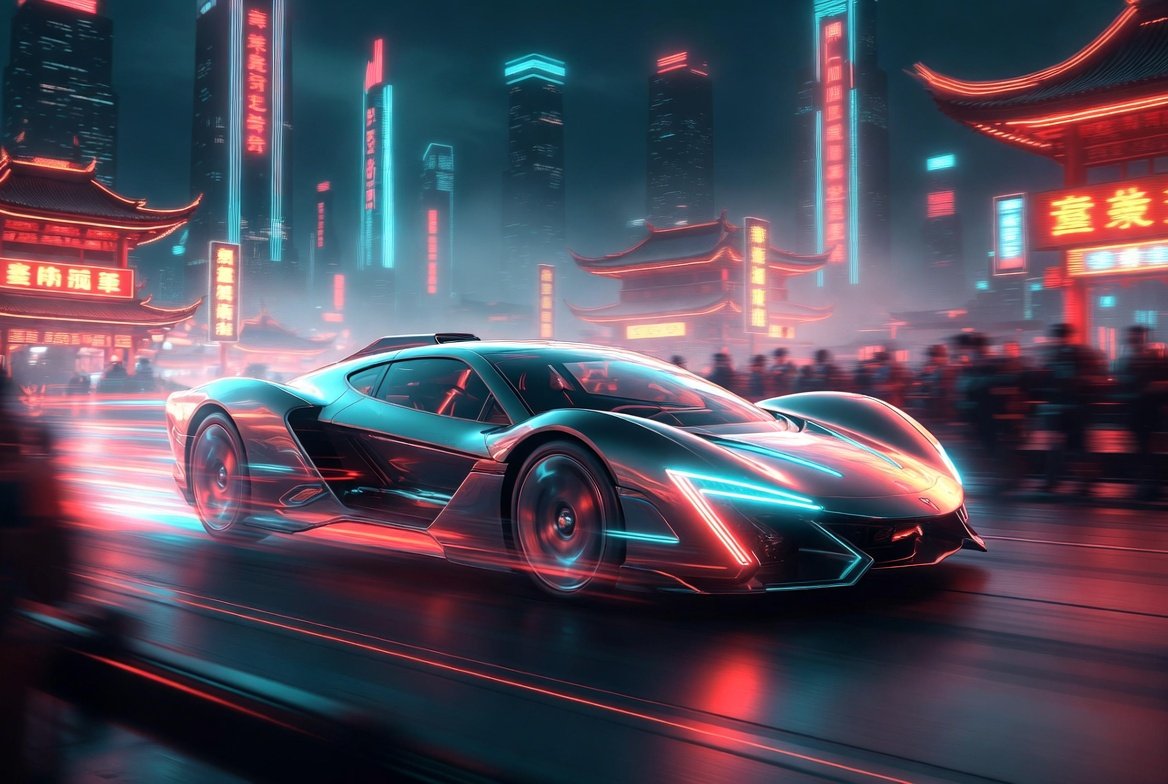
If you have encountered the term jipinfeiche while browsing the internet and found yourself presented with contradictory explanations, you are experiencing a phenomenon that has become increasingly common in the digital content landscape. Some articles describe jipinfeiche as an ancient cultural concept rooted in harmony and balance. Others present it as a technology platform, a productivity philosophy, or an emerging digital keyword with no fixed meaning. A smaller number of sources provide the actual, straightforward explanation.
What Does Jipinfeiche Mean?
The term jipinfeiche is formed from two Chinese compound words:



- Ji Pin (极品) — This means premium, top quality, or the very best of its kind. The character 极 (jí) means extreme or utmost, and 品 (pǐn) means quality, grade, or product. Together they describe something that has reached the highest possible standard.
- Fei Che (飞车) — This means flying car or high-speed vehicle. The character 飞 (fēi) means to fly, and 车 (chē) means vehicle or car. The combination suggests something moving at exceptional speed.
When combined, jipinfeiche translates literally as premium flying car or top-quality high-speed vehicle. In its most direct application, this is a phrase that describes a fast, high-performance vehicle of the finest quality. In Chinese digital culture, the term has become particularly associated with racing games, high-performance car content, and the general concept of premium speed and efficiency.
Jipinfeiche in Chinese Gaming Culture
One of the most significant contexts in which jipinfeiche appears is gaming. In China, the term became associated with the localization of the Need for Speed racing game franchise, one of the most successful and long-running racing game series in the world. Need for Speed is known globally for its emphasis on high-speed driving, premium cars, and competitive racing, making jipinfeiche a natural fit as a descriptive term for the franchise’s Chinese market presence.
The connection between jipinfeiche and racing games is an important one because it explains much of the term’s digital presence and why it generates search interest particularly among gaming communities in China and among international users who encounter it in gaming contexts. Someone who comes across jipinfeiche in a discussion of mobile racing games or car content is most likely encountering this gaming association rather than any of the more abstract interpretations that circulate in English-language content.
Jipinfeiche as an Online Marketplace Concept
Beyond gaming, jipinfeiche has been used as a descriptor and brand concept for online platforms that position themselves around the combination of premium quality and efficient speed. Several Chinese e-commerce and car-buying platforms have adopted the term or associated branding to communicate the idea of a service that delivers top-quality products with a fast, efficient, and streamlined experience.
In this context, jipinfeiche describes the platform philosophy rather than a specific product. The emphasis is on:
- Speed: Fast browsing, quick checkout, rapid delivery, and efficient service without unnecessary friction
- Quality: Premium products, verified listings, and high standards of customer experience
- Reliability: Consistent performance across multiple interactions rather than occasional excellence
- Transparency: Honest product listings with inspection reports, ratings, and clear information
Car marketplace platforms in particular have used jipinfeiche associations because the combination of premium vehicle quality and fast, efficient transaction makes the term especially apt in that commercial context. A buyer using a jipinfeiche-style car platform might expect detailed inspection reports on used vehicles, clear pricing, multiple payment options, and a process designed to be significantly less stressful than the traditional second-hand car buying experience.
Why Does So Much Misleading Content About Jipinfeiche Exist?
The majority of English-language content about jipinfeiche does not accurately explain what the term means or where it comes from. Instead, it presents invented or vague interpretations ranging from an ancient cultural practice to a philosophical concept to an abstract digital keyword. Understanding why this happens helps readers navigate similar situations with other unfamiliar terms.
The phenomenon is largely a product of the guest posting and content marketing ecosystem. When a term begins generating search volume without a dominant, well-established explanation in English, content creators recognise an opportunity to rank for that keyword with relatively little competition. Rather than researching the actual meaning, many simply create plausible-sounding content that fills the keyword space without adding genuine information.
Because jipinfeiche contains romanised Chinese characters that are unfamiliar to most English speakers, it is particularly susceptible to this treatment. Without knowledge of Chinese, a reader cannot easily evaluate whether a description of the term as an ancient cultural concept or a philosophical framework is credible. The term sounds like it could be many things, which gives content creators latitude to describe it as whatever they choose.
The accurate answer, that jipinfeiche means premium high-speed vehicle and is associated with Chinese gaming culture and e-commerce, is straightforward but less engaging than invented mysticism, which is partly why the accurate explanation is often buried beneath more colourful fabrications in search results.
The Broader Lesson About Trending Foreign Language Keywords
Jipinfeiche is not an isolated case. Many foreign language terms, particularly those from Chinese, Japanese, Korean, and other non-European languages, become search keywords in English-speaking markets for various reasons and are subsequently surrounded by English-language content that misrepresents their meaning.
The pattern is consistent. A term with search volume but limited accurate English-language explanation generates content from creators who prioritise keyword visibility over accuracy. That content, once published and indexed, shapes how subsequent readers understand the term, creating a self-reinforcing cycle of misrepresentation.
Checking the linguistic origins of unfamiliar terms, looking for sources with actual knowledge of the language in question, and treating vague or philosophically inflated descriptions of specific foreign language phrases with scepticism are all useful habits for navigating this landscape.
Jipinfeiche as a Productivity and Mindset Concept
While the gaming and e-commerce applications of jipinfeiche are the most documentable, there is a legitimate metaphorical extension of the term into productivity and personal performance thinking. The idea of combining premium quality with high speed is genuinely applicable beyond cars and racing games.
In professional and business contexts, the jipinfeiche concept can describe an approach that refuses to accept the common trade-off between quality and efficiency. Many processes and organisations assume that doing something well requires doing it slowly, or that doing something quickly requires accepting lower quality. Jipinfeiche as a conceptual framework challenges this assumption, suggesting that with the right systems, preparation, and mindset, premium results can be achieved with genuine speed.
This application of the term is meaningful even if it represents an evolution from the literal Chinese meaning rather than a direct translation. The core idea, that excellence and efficiency are not mutually exclusive but can reinforce each other, is valuable regardless of its linguistic origins.
How Jipinfeiche Appears in Digital Culture
The presence of jipinfeiche in digital conversations varies significantly depending on the platform and community.
In Chinese gaming communities and car enthusiast forums, the term appears in its most accurate context, describing racing game content and premium vehicle discussions. In Chinese e-commerce spaces, it describes platform quality positioning. In international SEO and content marketing circles, it has become an example of how foreign language keywords generate English-language content of questionable accuracy. In wellness and lifestyle blogs, it has been incorrectly described as an ancient practice or philosophical system.
Understanding which of these contexts a particular piece of content is drawing from helps readers assess its reliability. Content that discusses jipinfeiche in relation to gaming, Chinese car culture, or e-commerce speed and quality is likely to be more grounded than content that presents it as a deep cultural or spiritual concept without any Chinese-language references.
Practical Applications of Jipinfeiche Thinking
Setting aside the linguistic confusion, the core concept embedded in jipinfeiche, the pursuit of peak quality delivered with maximum speed and efficiency, has genuine practical value across a range of contexts.
- Product development: Teams that treat quality and speed as complementary rather than competing priorities tend to produce better outcomes than those locked into traditional trade-off thinking
- Customer service: Resolving issues quickly and thoroughly rather than slowly or superficially creates far stronger customer loyalty
- Personal productivity: Developing systems that allow high-quality output to be produced efficiently, rather than choosing between rushed mediocrity and slow perfectionism, is a practical life skill
- E-commerce design: Platforms that make premium products accessible through fast, clear, and reliable processes outperform those that sacrifice one dimension for the other
Frequently Asked Questions About Jipinfeiche
What does jipinfeiche mean in English?
Jipinfeiche is a Chinese term combining Ji Pin (极品, meaning premium or top quality) and Fei Che (飞车, meaning flying car or high-speed vehicle). Together it translates roughly as premium flying car or top-quality high-speed vehicle.
Is jipinfeiche an ancient cultural or spiritual concept?
No. Claims that jipinfeiche is an ancient cultural practice or philosophical system are inaccurate and appear to be invented content created around the keyword. The term has a specific Chinese linguistic origin related to quality and speed.
What is the connection between jipinfeiche and gaming?
In China, jipinfeiche has been used in connection with racing games, particularly the Need for Speed franchise. The term’s emphasis on premium high-speed vehicles made it a natural fit for racing game branding and community discussions.
Is there a jipinfeiche shopping website or platform?
Several Chinese e-commerce and car marketplace platforms have used jipinfeiche as a brand concept to communicate premium quality and efficient service. These are real commercial entities, but no single globally dominant jipinfeiche platform exists in the way that, for example, Amazon or Alibaba do.
Why is so much misinformation written about jipinfeiche online?
The term generates search interest without an established accurate English-language explanation, creating an opportunity for content creators to rank for the keyword with invented or vague descriptions. This is a common pattern with unfamiliar foreign language terms in English-language content markets.