
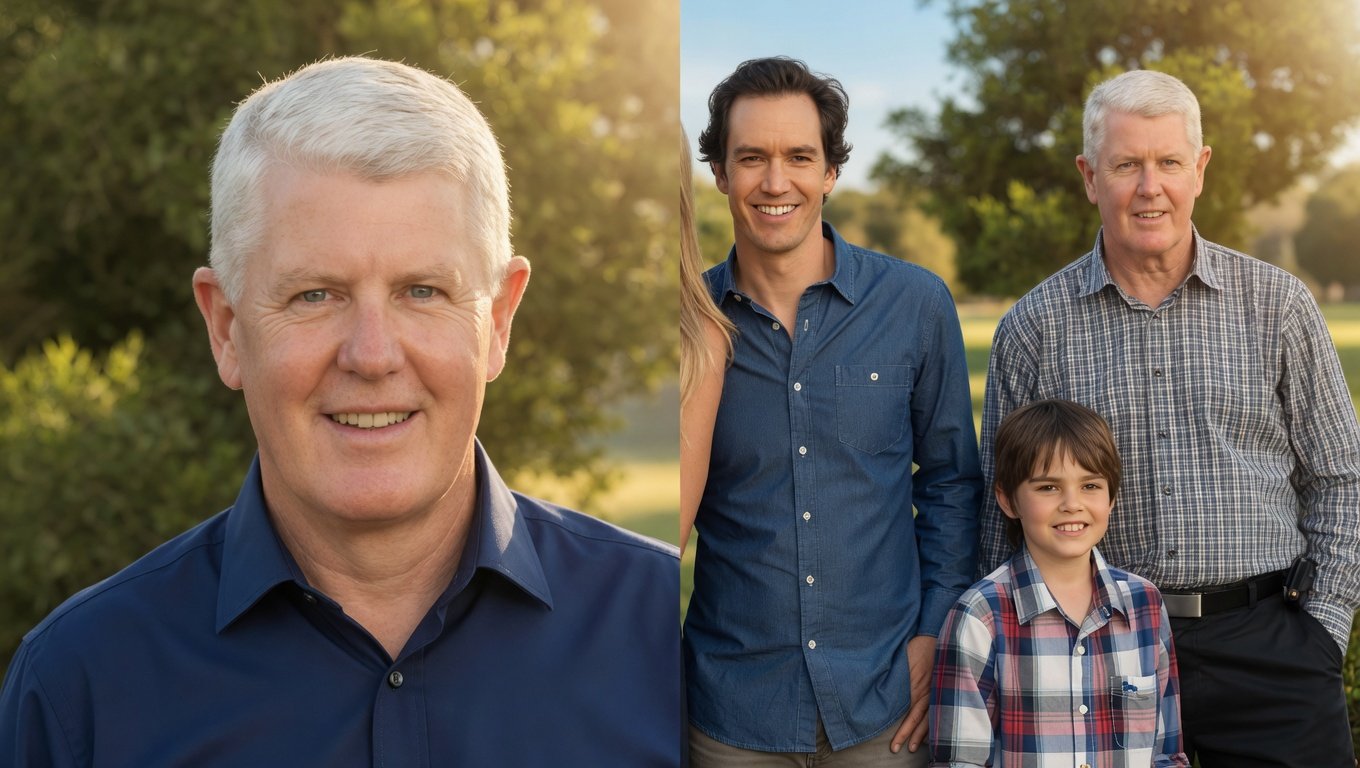
When people search for Hans Gosselaar, they are usually starting from an interest in his son Mark-Paul Gosselaar, the actor best known for playing Zack Morris in Saved by the Bell and Detective John Clark Jr. in NYPD Blue. The father-son connection draws attention to Hans, but the story that emerges when you look at him directly is one with genuine depth, historical weight, and a cultural richness that deserves more than a footnote in his son’s biography.
Hans Gosselaar Quick Biography
| Detail | Information |
|---|---|
| Full Name | Hans Gosselaar |
| Born | Approximately 1933, Netherlands |
| Died | 2020 |
| Heritage | Dutch and German Jewish descent |
| Nationality | Dutch, later American |
| Profession | Plant supervisor at Anheuser-Busch |
| Wife | Paula van den Brink (Dutch-Indonesian, KLM flight attendant) |
| Children | Mike, Linda, Sylvia, and Mark-Paul Gosselaar |
| Migration | Moved from Netherlands to California shortly before Mark-Paul’s birth in 1974 |
| Paternal grandparents | Aron Gosselaar (born 1904) and Ida Ferdinande Kosel (born 1908) |
| Great-grandparents (via Mark-Paul) | Hartog “Herman” Gosselaar and Hester van Emden, killed at Sobibor, September 4, 1943 |
Who Was Hans Gosselaar?
Hans Gosselaar was the Dutch-born father of actor Mark-Paul Gosselaar. Born in the Netherlands around 1933, he grew up during one of the most catastrophic periods in European Jewish history, though the full extent of what that meant for his own family may not have been fully known or discussed during his lifetime.


He was a man of German and Dutch Jewish descent, and his family’s roots in the Jewish communities of the Netherlands placed them directly in the path of the Nazi occupation that began in 1940. Hans was approximately seven years old when Germany occupied the Netherlands, and the years that followed were defined by the systematic persecution, deportation, and murder of Dutch Jews on a scale that made the Netherlands one of the countries with the highest Jewish death rates in occupied Europe.
Hans survived those years and eventually built a new life. He met Paula van den Brink, a woman of Dutch-Indonesian background who worked as a flight attendant for KLM Royal Dutch Airlines. They married and raised four children, three of whom were born in the Netherlands before the family relocated to California shortly before Mark-Paul, their youngest, was born in March 1974.
In California, Hans worked as a plant supervisor at Anheuser-Busch, the brewing company. This was steady, skilled work that provided his family with a comfortable middle-class life. He was not a man who sought attention or celebrity even as his youngest son became one of the most recognisable faces on American television. He lived privately, supported his family, and eventually passed away in 2020 from an undisclosed illness.
The Holocaust in Hans Gosselaar’s Family
The most historically significant dimension of Hans Gosselaar’s story is its connection to the Holocaust. Mark-Paul Gosselaar revealed in various interviews and in the genealogical documentation associated with his family that his great-grandparents on his father’s side were killed in the Holocaust.
Hartog “Herman” Gosselaar and Hester van Emden, Hans’s paternal grandparents, were murdered at Sobibor, a Nazi extermination camp located in occupied Poland. They died there on September 4, 1943. Sobibor was one of the three Operation Reinhard death camps built specifically for the mass murder of Jews as part of the Final Solution. Unlike concentration camps where prisoners were subjected to forced labour before death, Sobibor was designed for immediate killing upon arrival. The vast majority of those transported there were gassed on the day of their arrival.
The fact that Hartog and Hester Gosselaar died at Sobibor means that Hans grew up knowing, at some level, that members of his family had been systematically murdered during the war. How much he knew, how he processed it, and how much he shared with his children are questions that cannot be answered from the available public record. Mark-Paul has acknowledged the family history without elaborating on what Hans shared or withheld about it during his lifetime.
This dimension of Hans Gosselaar’s heritage matters because it places him within one of the defining catastrophes of the twentieth century, not as an abstract historical figure but as a person who grew up in its immediate aftermath, in a country where the absence of entire communities was a visible and tangible reality of daily life.
Dutch Jewish History: The Context of Hans’s Heritage
Understanding Hans Gosselaar’s background requires knowing something about the specific history of the Jewish community in the Netherlands. Before the Second World War, the Netherlands had a Jewish population of approximately 140,000 people. By the end of the war, roughly 75 percent of Dutch Jews had been murdered, one of the highest proportional death rates of any Western European country. This was the result of efficient German administration, the geography of the Netherlands which made escape difficult, and the cooperation or acquiescence of significant portions of the Dutch bureaucracy and police with German deportation orders.
The Amsterdam Jewish community, from which many Dutch Jews came, was almost completely destroyed. Synagogues were empty, neighbourhoods that had been vibrant with Jewish life were silent, and the names on gravestones in Jewish cemeteries corresponded to families that had largely ceased to exist. This was the world that Hans Gosselaar grew up in after the war, and the world he eventually chose to leave when he immigrated to America.
Hans and Paula: A Multicultural Family
Hans’s marriage to Paula van den Brink added another layer of cultural complexity to the family he built. Paula was of Dutch-Indonesian background, her heritage rooted in the complex history of Dutch colonialism in what is now Indonesia. She worked as a flight attendant for KLM, a common path for young Dutch women seeking professional opportunities and international experience in the postwar decades.
The combination of Hans’s Dutch-Jewish heritage and Paula’s Dutch-Indonesian background produced children who embodied a genuinely multicultural inheritance in a way that was relatively unusual for their generation. Mark-Paul Gosselaar has spoken publicly about this heritage, famously discussing on The Tonight Show how Zack Morris’s iconic blonde hair was actually dyed, because his mother was, as he put it, a tiny Indonesian woman. Half-Asian playing the quintessential blonde California teenager for years was, he acknowledged, an irony the show’s audience never knew.
The family’s Dutch language was spoken at home. Mark-Paul grew up speaking fluent Dutch, a language that connected him to both his father’s Netherlands roots and the European cultural context from which the family had come.
Hans as a Father
The public record contains relatively little detail about Hans Gosselaar as a father figure, which reflects both his privacy and the way celebrity journalism typically focuses on the famous family member rather than those around them. What can be assembled from various sources suggests a man who was consistent, supportive, and present in his children’s lives without making a production of it.
He supported Mark-Paul’s early modelling and acting activities, including participation in the International Modelling and Talent Association convention that helped launch his son’s career. He maintained his own professional identity as a plant supervisor while his son became one of the most recognised teenagers on American television. And he apparently maintained a meaningful personal life after his divorce from Paula, entering a relationship with another woman who cared for him until his death in 2020.
Mark-Paul has spoken about his father’s later partner with warmth, describing her as part of the family and acknowledging her care for Hans during his final period of illness. This detail, brief as it is, suggests a man whose personal relationships were characterised by genuine connection rather than conflict or estrangement.
Hans Gosselaar’s Death and Legacy
Hans Gosselaar died in 2020 from an undisclosed illness. He was approximately 87 years old. His death was noted publicly when Mark-Paul mentioned it in interviews, acknowledging the loss of his father without turning it into a media event.
His legacy is not one that will be found in industry records, cultural databases, or entertainment histories. It lives instead in the family he built, the cultural heritage he carried across an ocean, and the son whose career has brought joy to millions of people who never knew the quiet Dutch plant supervisor whose journey made it possible.
The connection to Sobibor, to the Dutch-Jewish community decimated by the Holocaust, and to the resilient tradition of migration and rebuilding that characterised Jewish life in the postwar period, these are not footnotes to the Gosselaar story. They are the foundation on which everything else was built.
Frequently Asked Questions About Hans Gosselaar
Who was Hans Gosselaar?
Hans Gosselaar was the Dutch-born father of actor Mark-Paul Gosselaar. He was of German and Dutch Jewish descent, worked as a plant supervisor at Anheuser-Busch in California, and died in 2020. His family had deep roots in the Dutch-Jewish community, and two of his ancestors were killed at Sobibor during the Holocaust.
What happened to Hans Gosselaar’s family in the Holocaust?
His paternal great-grandparents, Hartog “Herman” Gosselaar and Hester van Emden, were killed at Sobibor extermination camp in occupied Poland on September 4, 1943. Sobibor was an Operation Reinhard death camp where the vast majority of arrivals were killed on the day they arrived.
When did Hans Gosselaar die?
Hans Gosselaar died in 2020 from an undisclosed illness. He was approximately 87 years old and had been cared for by a longtime partner in his final years.
What did Hans Gosselaar do for a living?
He worked as a plant supervisor at Anheuser-Busch, one of the largest brewing companies in the United States, providing a stable middle-class lifestyle for his family in California.
Where was Hans Gosselaar from?
He was born in the Netherlands around 1933 and immigrated to the United States with his family shortly before his youngest son Mark-Paul was born in California in 1974.